

Stadium Red Breathes New Life Into New York Hip-Hop Scene[VIDEO]
October 2, 2010
The Recording studio is dead, long live the recording studio.
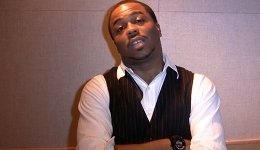
There is a new renaissance brewing in Harlem. On the corner of 125th Street and Park Avenue the studio space originally opened by Jazz great Ornette Coleman is making a bold leap into the future.
On this night musicians, songwriters and producers are gathered at Stadium Red to celebrate the studio’s expansion and to formally welcome it’s newest occupant, Just Blaze.
“10 hours ago this was a construction war zone,” says a sleepy Just Blaze in the midst of a celebration at Stadium Red. “There was dust and tools and parts. These walls were all taken down so we could install the monitoring system. I’m running on 90 minutes of sleep.”
Over the years advances in recording technology have made large recording studios less necessary and cost effective causing many to close down. Late last year Just Blaze officially shut down the studio Roc-A-Fella Records made famous, Baseline, leaving a gaping hole in the creative community that gave birth to hip-hop. But looking to the future Just moved his entire operation uptown to Stadium Red.
“The interesting thing about closing Baseline…a lot of studios were closing because they couldn’t pay their rent and the changes in the music industry. We weren’t at that point but I had to look ahead,” says Just. “Where are we going to be in five or ten years? These answers you really don’t know so it came to a point where I said I might shut this down but what we do has to go on.”
As providence would have it his old friend and fellow engineer Ariel Borujow (Resident Ask The Pro Specialist) put Just in touch with Claude Zdanow, owner of Stadium Red who was looking to expand. The result is a fully expanded facility with some modern touches that still pays homage to the past.
Innovations like actual monitors in the recording booths instead of two-way glass will allow the studio to be completely networked.
“We don’t have to worry about sound bouncing off of glass while they’re recording their vocals. You can be in any room and have a direct line of site to the engineer. If you want to do drums in the live room and record them in my room, no problem.”
While Just was concerned that folks wouldn’t make the hike all the way uptown so they added personal touches like a full service kitchen with a chef to make it the ultimate “destination spot.”
“I just come and getaway from the girlfriend,” jokes Double-O. “This is what I call the Superman cave. It’s one of the best studios in the city. Plus everyone in Harlem wants to be an MC so you know it’ll stay open!”
While Double is having some fun there is a hope that what he says is true. Already artists like Donnie Goines have made the studio their home and Omen has been part of the Stadium Red in-house team for years.
“We’ll be making some more enhancements,” says Omen, who has just added the Native Instruments Maschine to his production arsenal. “So look out for an enhancement party soon.”
Watch Nodfactor.com’s exclusive video from the Stadium Red expansion party:
EXCLUSIVE VIDEO: Illfonics On Making Gorilla Zoe’s “Day Dreamer”
April 14, 2010
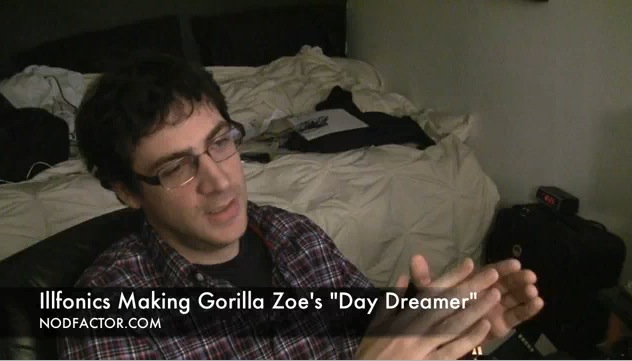
Who: Illfonics (Matt Friedman and Jed Cappelli)
What: Produced the following tracks…
“Nananana” for Jim Jones,
“Enter Galactic” on Kid Cudi,
“Day Dreamer,” Gorilla Zoe
“Come Party With Me” and “American Girl” For LL Cool J.
Where: NYC
Key advice: “You want your beat to sound as finished as possible because artists and A&Rs don’t want to have to imagine what it will sound like…”
NODFACTOR.COM: Why the name Illfonics?
ILLFONICS(Matt): Our friend actually came up with that a long time ago joking around. We were talking about the Delfonics and he said you guys should call yourselves Illfonics. We were having such a hard time coming up with so we used it.
How did you get started in production?
I’ve been playing instruments my whole life, bands and stuff. And in college I got an MPC and then got Logic and switched everything over to that.
I had saved up and got my MPC back in ‘98. Back then it had so little memory that it’s laughable now. That was the start of learning to sequence and cutting up samples. But once I got Logic it was a combination of dumping stuff into Logic and sequencing in there. Then eventually I got Battery for my drums. After that I never looked at the MP again.
Me and JED linked in college at NYU in the music tech program there. We were doing weird electronic stuff with really intensive drum programs. Detail oriented stuff where you’d be working on a track for three months. Then Jed linked up with someone in L.A. and started working on more commercial production, R&B and Pop stuff. When he came back we said lets give this a real shot. We started having fun with it. It was less stressful than the stuff we were working on.
How did you link up with Gorilla Zoe to do “Day Dreamer?”
We had a meeting with his publisher and he came in and we hit it off. We played some beats and he liked a lot of shit. Our first session is where we knocked out Day Dreamer. He’s supposed to come back tonight actually.
Most producers that read this site are comfortable with their sound but they’re trying to get a placement and you’ve had some real success. Is good representation the key?
For everybody it’s different. Everyone gets where they’re going in a different way. Our manager Toshi [veteran scribe Toshitaka Kondo] is out there hustling and meeting people. You have to get stuff out there and slowly over time building that respect and reported with people. Then you get those meetings.
What was the first track you placed?
The first thing we did was on the Re-Up Gang project [“My Life’s The Shit”] that came out on Koch and then the LL Cool J beats for Exit 13. We met with LL, hung out one night dropping off the stems for the mix for Come Party With Me and he said play me more shit. Then Toshi played him some other weird track that we didn’t think he’d like and he did. So that turned into two placements.
How would you describe your sound?
We’re very diverse. We do rock, pop, R&B, weird indie stuff. We try to have our drums really beefy sounding, using old school synths with an analog feel.
You’ve got the placements but still hold down a day job. You must not sleep much.
It’s tough. I work in advertising doing music supervision. It’s a lot of work and I get out of there and go straight to the studio. It’s really having two full time jobs. You gotta go at it really hard if you want to see any good returns.
Watch the video below to see how they made “Day Dreamer”
VIDEO:Tha Bizness In The Studio w/ DJ Khalil
December 19, 2009
(Props To CrateKings)
Turn up the volume a bit and get your notepads out.
Tech Tips: Just Blaze Chops In Logic
January 4, 2009
 FOLLOW US ON TWITTER